
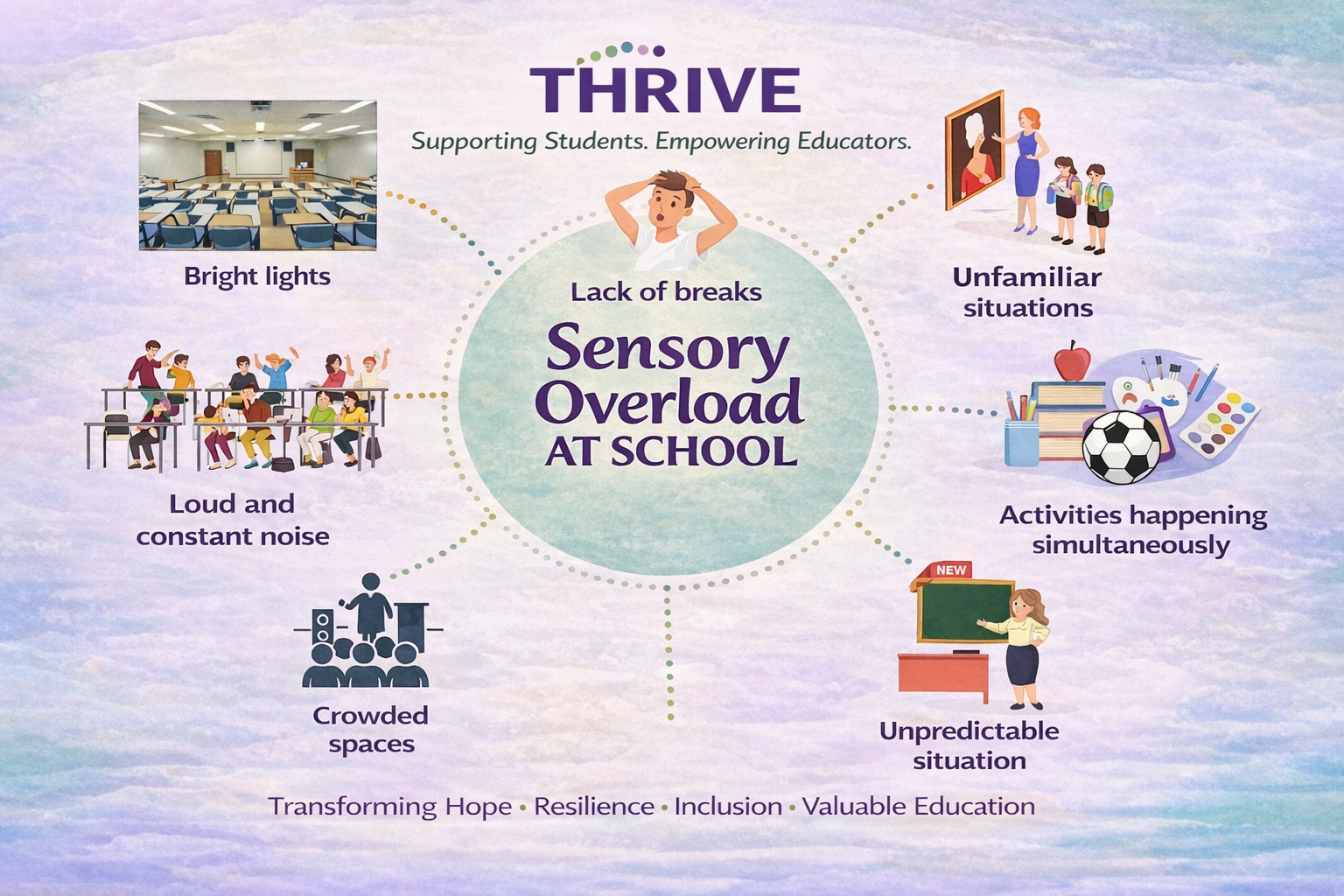
10 Sensory Triggers That Are Often Missed (and What Helps)
1. Fluorescent Lighting
Why it’s a trigger: Flickering and buzzing lights can cause headaches, eye strain, or agitation—often invisible to others.
How to help:
-
Use natural light when possible
-
Allow hats or tinted glasses
-
Offer seating away from direct overhead lighting
2. Background Noise Others Ignore
(HVAC systems, projectors, buzzing lights, hallway chatter)
Why it’s a trigger: The brain works overtime filtering sounds, leading to fatigue or shutdown.
How to help:
-
Provide noise-canceling headphones or ear defenders
-
Allow quiet workspaces
-
Reduce unnecessary background noise when possible
3. Crowded Transitions
(Hallways, lining up, arrival/dismissal)
Why it’s a trigger: Combines noise, movement, unpredictability, and touch.
How to help:
-
Offer early/late transitions
-
Use visual schedules and warnings
-
Provide an alternate route or calm waiting space
4. Unexpected Touch
(Accidental bumps, taps on the shoulder, crowded seating)
Why it’s a trigger: Can feel startling or threatening to the nervous system.
How to help:
-
Teach and model consent for touch
-
Maintain personal space expectations
-
Seat students with clear boundaries
5. Strong Smells
(Perfume, cleaning products, food)
Why it’s a trigger: Smell is directly connected to emotional regulation and memory.
How to help:
-
Use scent-free products when possible
-
Allow brief breaks from triggering environments
-
Seat students away from odor sources
6. Clothing & Textures
(Tags, seams, tight waistbands, scratchy fabrics)
Why it’s a trigger: Constant discomfort drains emotional regulation capacity.
How to help:
-
Allow flexible dress accommodations
-
Normalize comfort-based clothing choices
-
Avoid dress-code-related power struggles
7. Visual Clutter
(Busy walls, too many posters, bright colors)
Why it’s a trigger: Overloads visual processing and attention.
How to help:
-
Create calm, neutral visual spaces
-
Use designated “quiet” walls
-
Provide desk dividers or visual shields
8. Temperature Sensitivity
(Rooms too hot or too cold)
Why it’s a trigger: Body discomfort increases irritability and reduces focus.
How to help:
-
Allow layers or personal fans
-
Offer movement breaks to regulate body temperature
-
Be flexible with seating options
9. Unclear or Rapid Instructions
Why it’s a trigger: Cognitive overload can feel like a sensory threat.
How to help:
-
Break tasks into smaller steps
-
Pair verbal directions with visuals
-
Allow processing time before expecting a response
10. Emotional Atmosphere
(Stress, tension, raised voices, rushed adults)
Why it’s a trigger: Students co-regulate with adults—even when nothing is said.
How to help:
-
Use calm, predictable responses
-
Slow your voice and movements
-
Model regulation before expecting it from students
When a Student Is Triggered: What Helps Most
-
Reduce demands first (regulation before expectations)
-
Lower sensory input (lights, noise, people)
-
Offer choice, not control
-
Validate the experience (“Your body is having a hard moment.”)
-
Teach regulation skills outside of the crisis
Key Takeaway
Many behaviors labeled as “noncompliance” are actually sensory distress signals. When we notice and accommodate these hidden triggers, we create environments where students feel safe enough to learn—and succeed.