
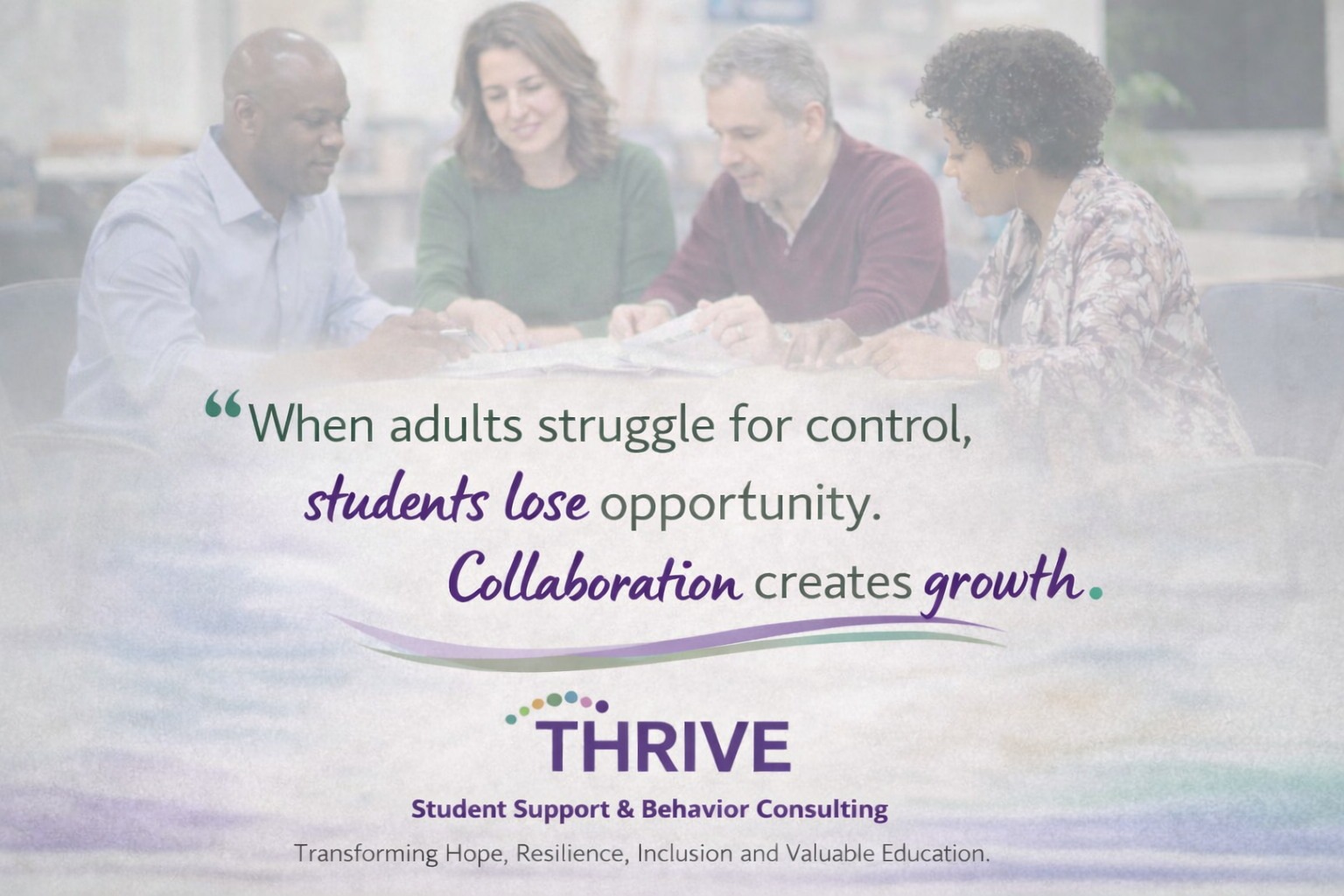
The Power Struggle No One Talks About: Adult Dynamics in IEP Meetings
When Adults Feel Unheard, Students Lose — And How We Can Do Better
Individualized Education Program (IEP) meetings are designed to support students. They are meant to bring together professionals and families to create thoughtful, data-driven plans that help children succeed. But sometimes, the most challenging dynamics in these meetings have little to do with the student — and everything to do with how adults communicate with one another.
Parents may leave feeling dismissed.
Teachers may leave feeling constrained.
Administrators may leave feeling pressured to balance competing demands.
And in the middle of it all… is the student.
This is the power struggle no one talks about.
When Adults Feel Powerless, Collaboration Breaks Down
IEP meetings bring together individuals with different roles, perspectives, and responsibilities:
- Parents bring deep knowledge of their child
- Teachers bring classroom experience and instructional data
- Specialists bring evaluation and intervention expertise
- Administrators bring system-level constraints and decision-making authority
Each voice matters. Yet when one voice dominates — or when participants feel unheard — the meeting shifts from collaboration to tension.
When this happens, we often see:
- Defensive communication instead of open dialogue
- Focus on positions rather than problem-solving
- Reduced trust between team members
- Decisions made quickly without meaningful discussion
- Parents and teachers leaving frustrated or defeated
These outcomes are not what the IEP process was designed to produce.
Under the Individuals with Disabilities Education Act (IDEA), the IEP is meant to be a collaborative team process — not a top-down decision.
According to IDEA:
- Parents are required members of the IEP team (34 CFR §300.321)
- Schools must ensure meaningful parent participation (34 CFR §300.322)
- The IEP must be developed based on the student's individual needs, not administrative convenience (34 CFR §300.324)
These protections exist because meaningful collaboration leads to better outcomes for students.
When adults feel unheard, the spirit of IDEA begins to break down — even if the process technically remains compliant.
Parents and Teachers Often Share the Same Concerns
One of the most overlooked dynamics in IEP meetings is this:
Parents and teachers often want the same things.
Both want:
- Students to make meaningful progress
- Supports that actually work
- Clear communication
- Realistic expectations
- Safe and supportive learning environments
Yet sometimes, the system unintentionally places parents and teachers on opposite sides.
Teachers may feel limited by:
- Staffing shortages
- Time constraints
- District policies
- Resource limitations
Parents may feel limited by:
- Lack of understanding of the process
- Difficulty accessing information
- Feeling intimidated in meetings
- Emotional stress surrounding their child's needs
When both groups feel constrained, frustration grows.
When frustration grows, communication becomes harder.
When communication breaks down, collaboration suffers.
And again, the student is caught in the middle.
The Role of Trust in Effective IEP Meetings
Trust is the foundation of effective collaboration.
When trust exists:
- Parents feel comfortable sharing concerns
- Teachers feel comfortable discussing challenges
- Teams explore solutions together
- Meetings feel productive instead of adversarial
But trust doesn't happen automatically. It is built through:
- Listening without interruption
- Acknowledging concerns, even when there is disagreement
- Asking clarifying questions
- Focusing on student needs instead of positions
- Using data to guide decisions
IDEA supports this collaborative approach by requiring that decisions be based on:
- Evaluation data
- Progress monitoring
- Observations
- Parent input
- Teacher input
(34 CFR §300.305; §300.324)
When teams rely on data and shared understanding, power struggles often diminish.
Moving From Power Struggles to Problem-Solving
Shifting from tension to collaboration does not require perfection. It requires intention.
Here are a few ways teams can move forward:
For Schools
- Create space for meaningful discussion, not rushed decisions
- Validate parent and teacher perspectives
- Clearly explain reasoning behind decisions
- Document discussions and next steps
For Parents
- Share concerns using specific examples
- Ask how decisions align with student data
- Request clarification when needed
- Focus on student needs rather than perceived positions
For Everyone
- Assume positive intent
- Focus on shared goals
- Stay student-centered
- Be open to compromise and creative solutions
These small shifts can significantly change the tone of an IEP meeting.
Compliance vs. Collaboration
Schools can technically comply with IDEA requirements and still leave participants feeling unheard.
But meaningful collaboration goes beyond compliance.
When teams prioritize collaboration:
- Relationships strengthen
- Communication improves
- Solutions become more creative
- Student outcomes improve
This is the difference between doing what is required… and doing what truly supports students.
The Student Should Always Be the Center
It is easy to become focused on adult perspectives during difficult meetings. But the purpose of the IEP is always the same:
To support the student.
When teams return to this shared purpose, the dynamic often shifts.
Not because disagreements disappear — but because the focus becomes clearer.
The most effective IEP teams are not the ones that always agree.
They are the ones that work through disagreement respectfully, thoughtfully, and collaboratively.
Final Thoughts
The power struggle in IEP meetings is rarely intentional.
It often grows from stress, constraints, and competing perspectives.
But when we recognize this dynamic, we can begin to change it.
Parents, teachers, administrators, and specialists all bring valuable insight to the table.
When those voices are heard and respected, the IEP becomes what it was always meant to be:
A collaborative plan designed to help students thrive.
Resources
- Wrightslaw: https://www.wrightslaw.com
- IDEA Parent Guide (U.S. Department of Education): https://sites.ed.gov/idea
- IRIS Center (IEP and Collaboration Resources): https://iris.peabody.vanderbilt.edu
- Center for Parent Information and Resources: https://www.parentcenterhub.org
- Procedural Safeguards Overview: https://www.parentcenterhub.org/notice/
THRIVE Student Support & Behavior Consulting
Supporting Students. Empowering Educators.