
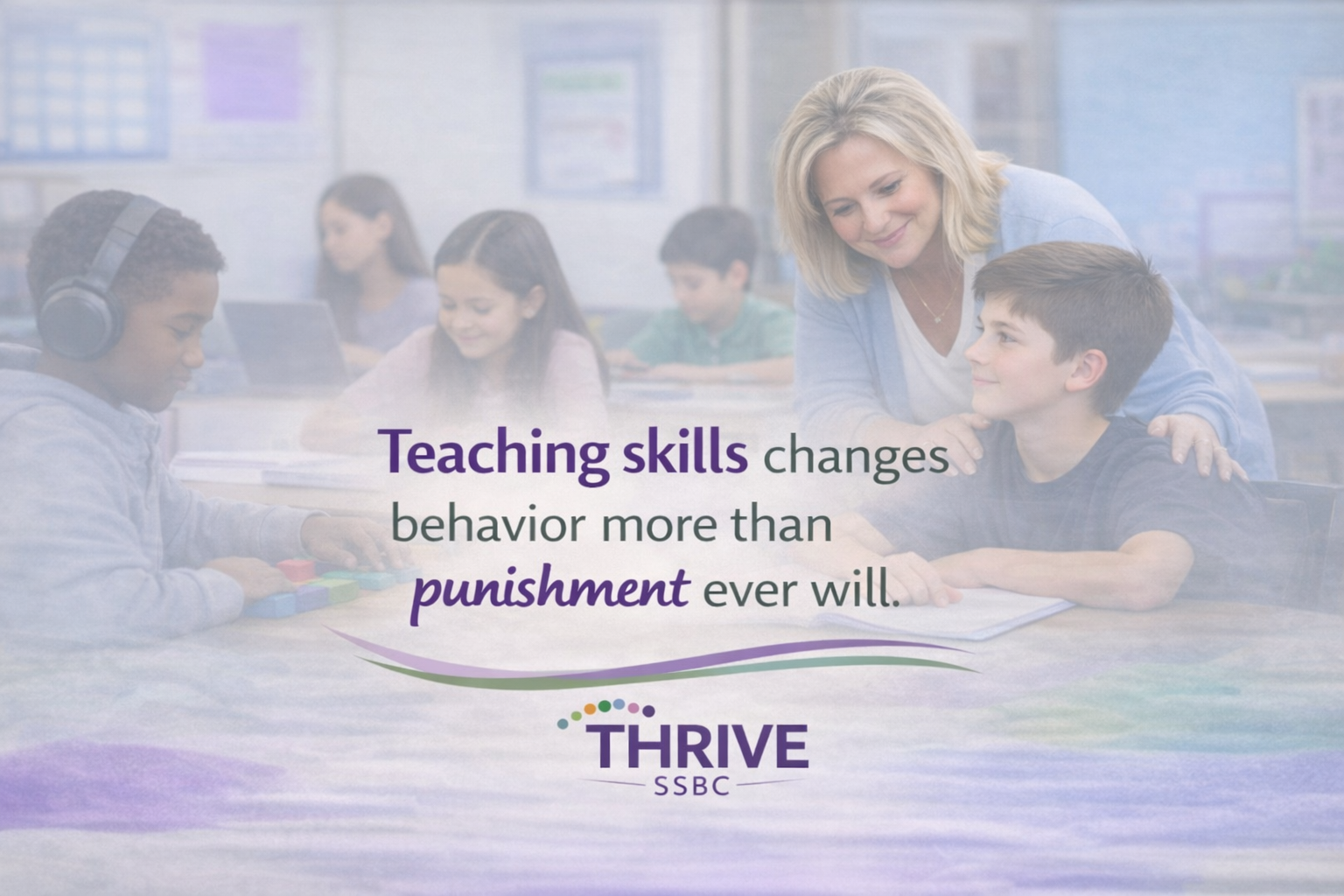
When Punishment Replaces Teaching, Students Pay the Price
I’ll be honest — it’s hard not to feel discouraged when I see punitive practices still being used in schools, especially with young children. Not because educators don’t care, but because many are operating inside systems that continue to rely on control instead of understanding.
Isolation.
Loss of recess or lunch.
Writing lines.
Public correction.
Extended detentions meant to “teach a lesson.”
These approaches are often framed as discipline, but in reality, they do very little to help children learn the skills they’re missing.
And that’s the part that upsets me most.
Behavior Is Information — Not a Moral Failure
When a student disengages, shuts down, or stops responding to consequences, that’s not defiance. That’s communication.
It tells us:
-
The demand exceeds the child’s current capacity
-
The environment isn’t meeting their needs
-
The skill we expect hasn’t been taught — or supported — yet
Punishment doesn’t fix any of those things. It simply adds pressure to a nervous system that’s already overwhelmed.
Children don’t “learn responsibility” through shame.
They learn it through modeling, guidance, and connection.
Why Traditional Punishments Miss the Mark
Many disciplinary practices still in use were never designed with child development, neuroscience, or disability in mind. They were created for efficiency — not regulation, not inclusion, not long-term success.
Taking away movement, social connection, or downtime doesn’t teach self-control.
It teaches avoidance.
It teaches fear.
And eventually, it teaches disengagement.
For students with disabilities, trauma histories, or regulation differences, these punishments can actually increase behavioral challenges — not reduce them.
Discipline Should Build Skills, Not Compliance
At THRIVE, we come back to one core question:
What skill is this child missing — and how do we teach it?
True discipline is developmental.
It focuses on:
-
Emotional regulation
-
Problem-solving
-
Repairing harm
-
Rebuilding trust
This doesn’t mean ignoring behavior or removing accountability. It means shifting from reaction to instruction.
Accountability without support is simply punishment.
Support without accountability is incomplete.
But when both exist together, growth happens.
What Supportive Discipline Looks Like
Supportive approaches don’t require perfection or unlimited time — they require intention.
That might look like:
-
Regulating with a student before addressing the behavior
-
Teaching replacement skills explicitly
-
Using restorative conversations instead of isolation
-
Adjusting expectations when demands exceed capacity
-
Partnering with families instead of assigning blame
These practices don’t undermine authority — they strengthen relationships.
And relationships are what actually change behavior.
This Is Bigger Than Individual Classrooms
Educators are exhausted.
Families are frustrated.
Students are struggling.
The issue isn’t effort — it’s outdated systems that still prioritize compliance over capacity-building.
We cannot continue to ask educators to “manage behavior” without giving them the tools, training, and support to do it well.
And we cannot continue to punish children for skills they haven’t been taught.
The THRIVE Commitment
THRIVE exists to challenge harmful norms — not by attacking educators, but by supporting them.
We believe:
-
Regulation precedes learning
-
Behavior reflects need
-
Dignity is non-negotiable
-
Collaboration works better than control
Our goal isn’t to make schools softer.
It’s to make them smarter, safer, and more humane.
Because when adults change the system,
students don’t just comply —
they THRIVE.